How to Launch an Advertising Campaign
There are no minimum deposit budgets at the moment, meaning you can start a campaign with any budget. It is effective to start with 100-250 USD₮ to evaluate the network's performance and make significant conclusions.
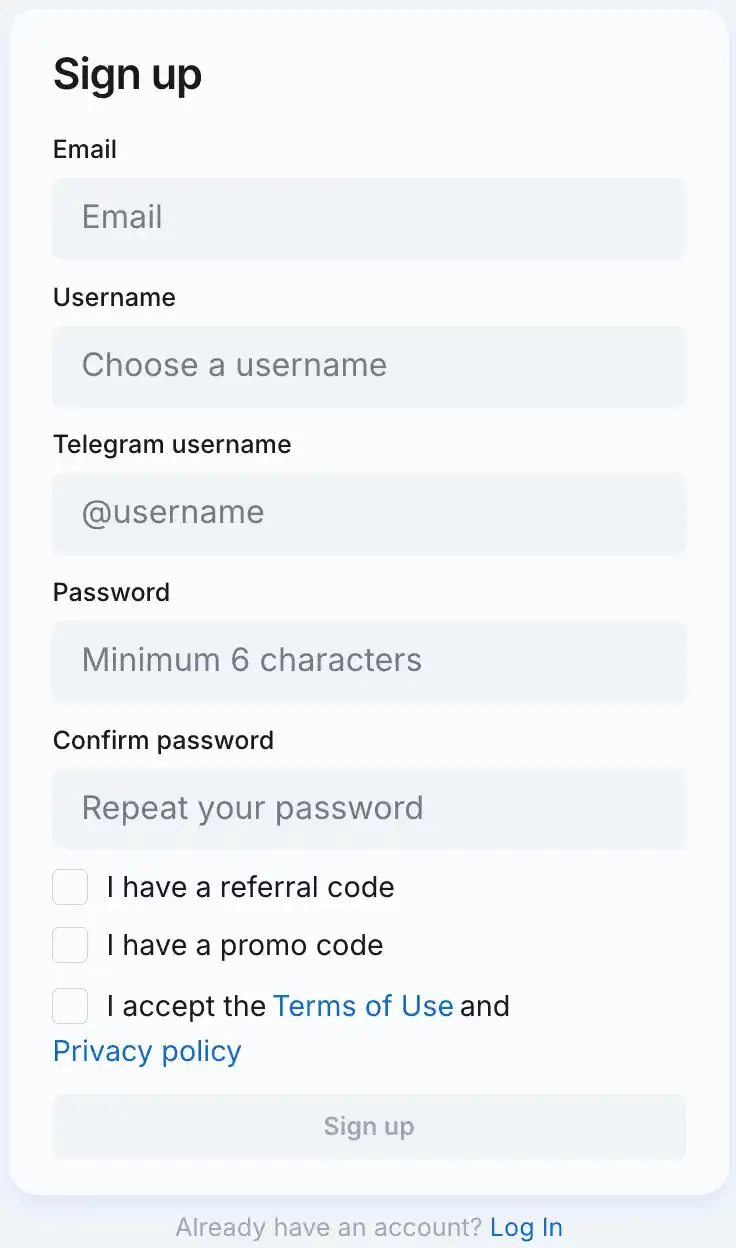
1. Register in the advertiser's personal account
WARNING
If you have already connected to our network as a publisher, it is important to authorize in the advertiser's account under the same login that you used to register in the publisher's account.
So we automatically won't show ad that lead to your app inside your app.
2. Creating campaign
Click the Create Campaign button, select AdsGram Network and choose the type of advertising campaign: Media ads or Inline ads. 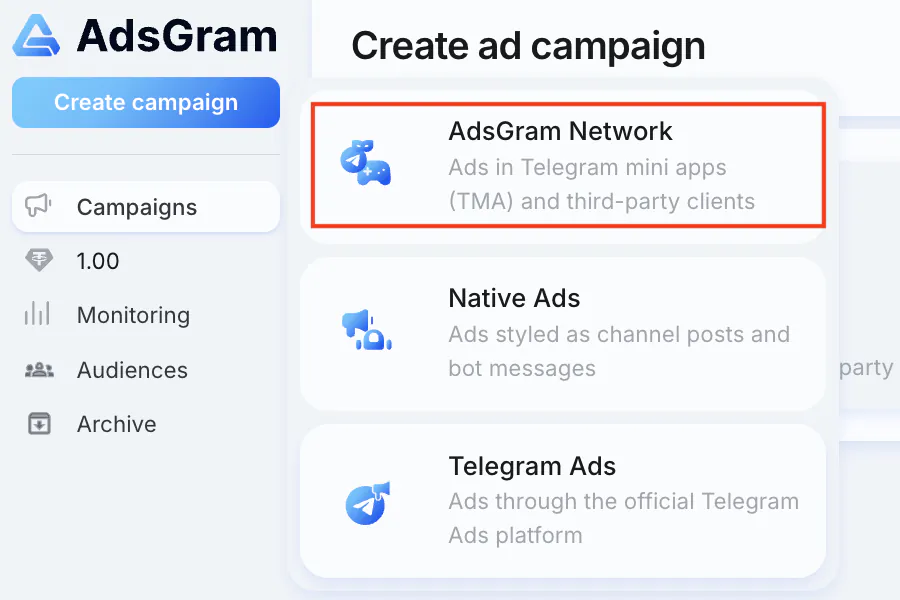
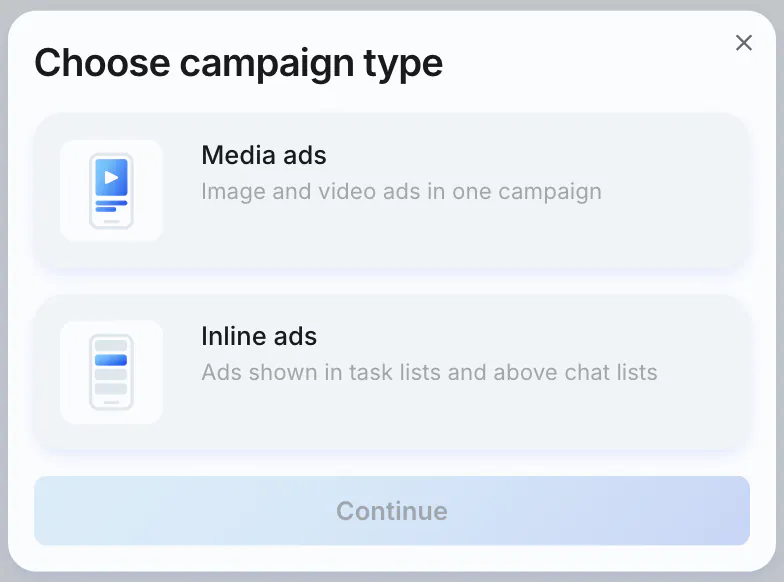
- Media ads – a full-screen ad format: video, image, or GIF. Different banner formats can be used within the same campaign. An image or GIF with text (Post) mimics a Telegram message. It's ideal for quickly launching a campaign without the cost of creating a video. The Video format is more engaging, showcasing the value of the offer through video.
- Inline ads – a native ad format displayed in the task lists and above chat lists.
More info about banner types you can find here.
Enter the campaign name. 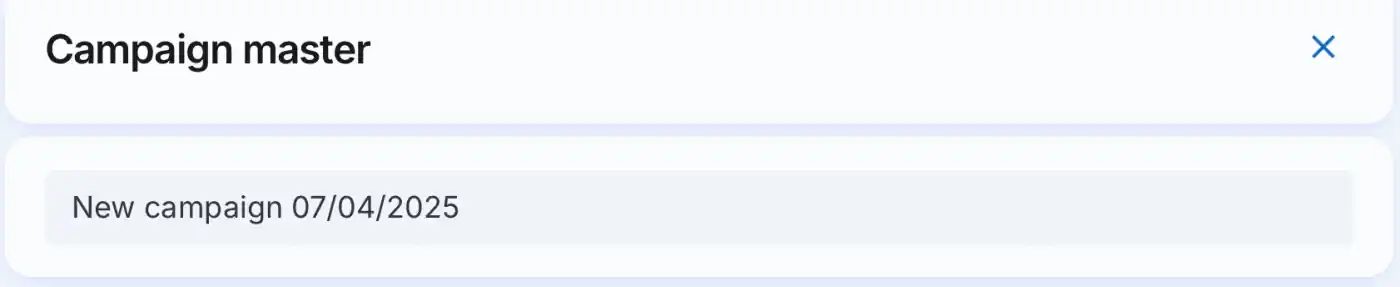
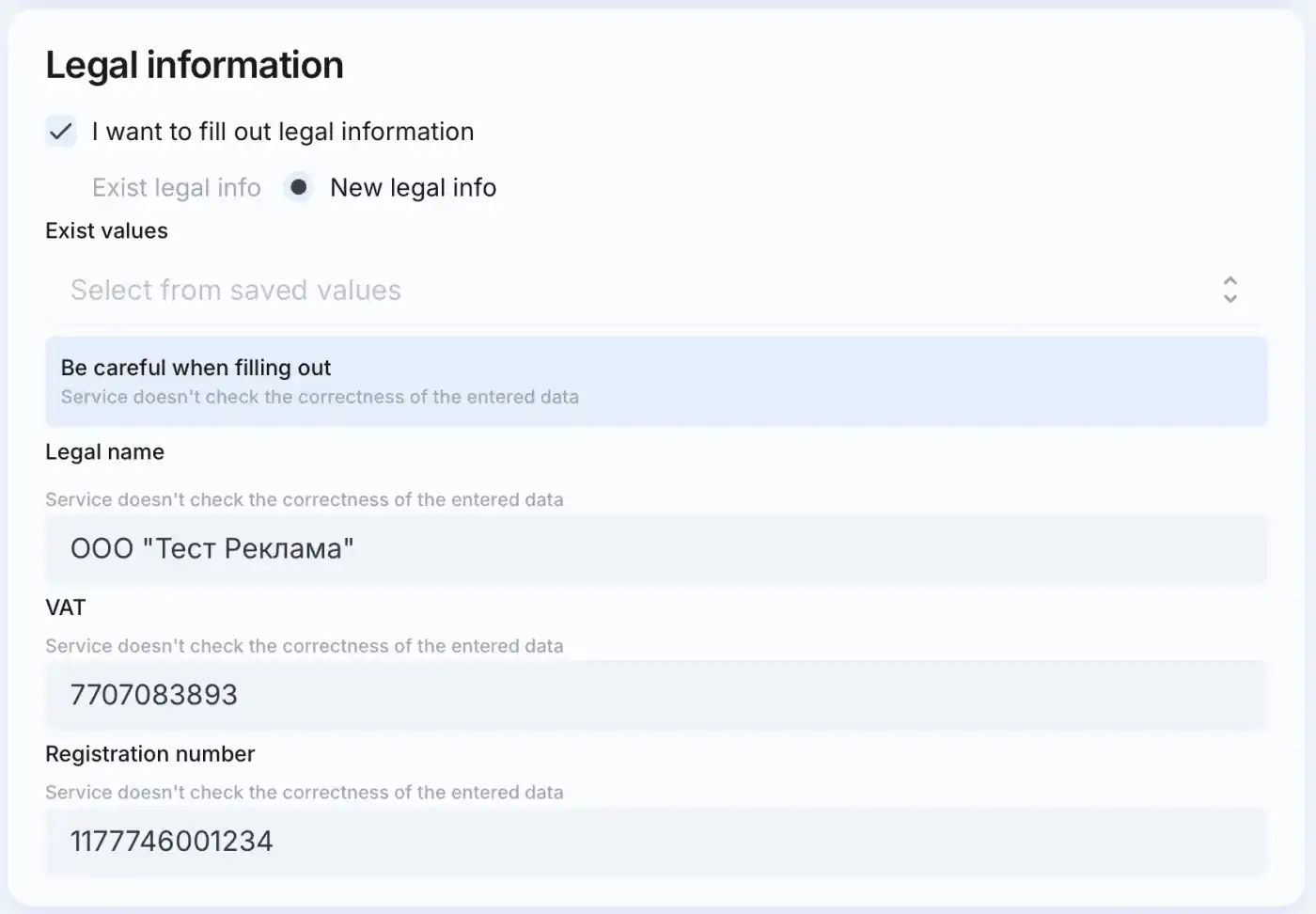
3. Filling out legal information
WARNING
This section is only relevant for ad campaigns targeting users in Russia.
If you need to include the ERID in your ad, please contact @adsgramsupport or support@adsgram.ai to activate this feature.
IMPORTANT
Be careful when filling out. Service does not generate an ERID and does not validate the token.
4. Filling in targeting
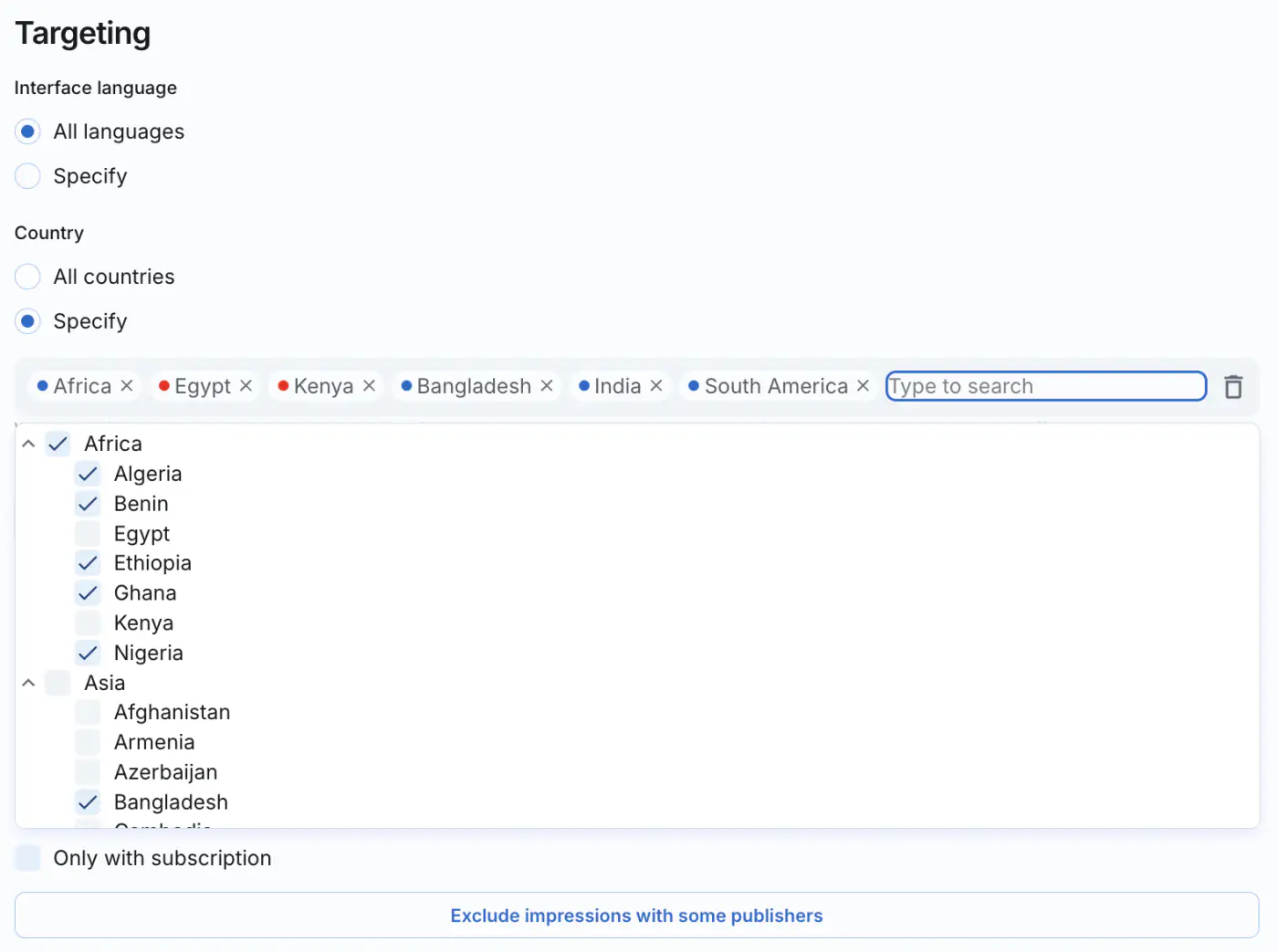
- Interface language
- Region (with the option to exclude / include specific countries)
- VPN settings
- Platform (iOS/Android)
- Telegram Premium status
If necessary, prevent ads from showing on platforms by adding their unique IDs (no more than 50 in one campaign). For instructions on how to find and use Platform IDs, see the "Campaign Analytics" section.
5. Include or exclude audience
Choose specific segments to focus ads on them or exclude them from the audience to show. The campaign is limited to 10 segments for audience creation. Previously created segments are available in the dropdown list when you click the search field. 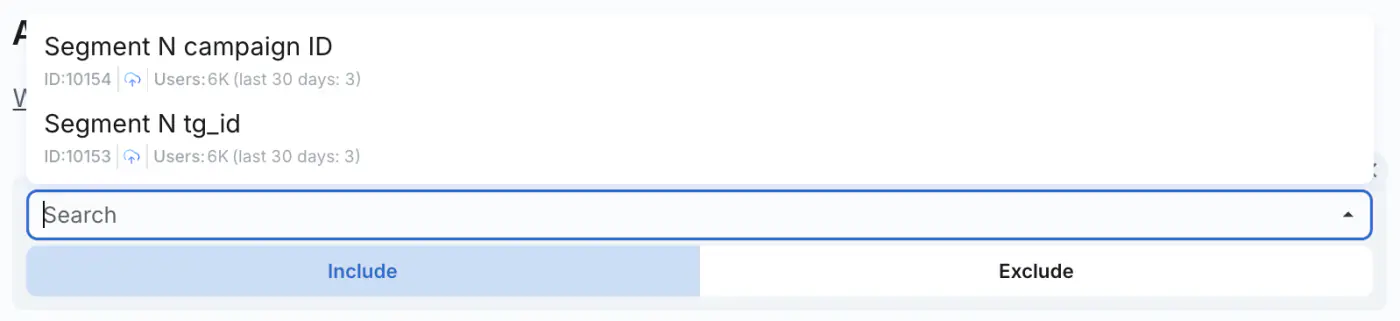
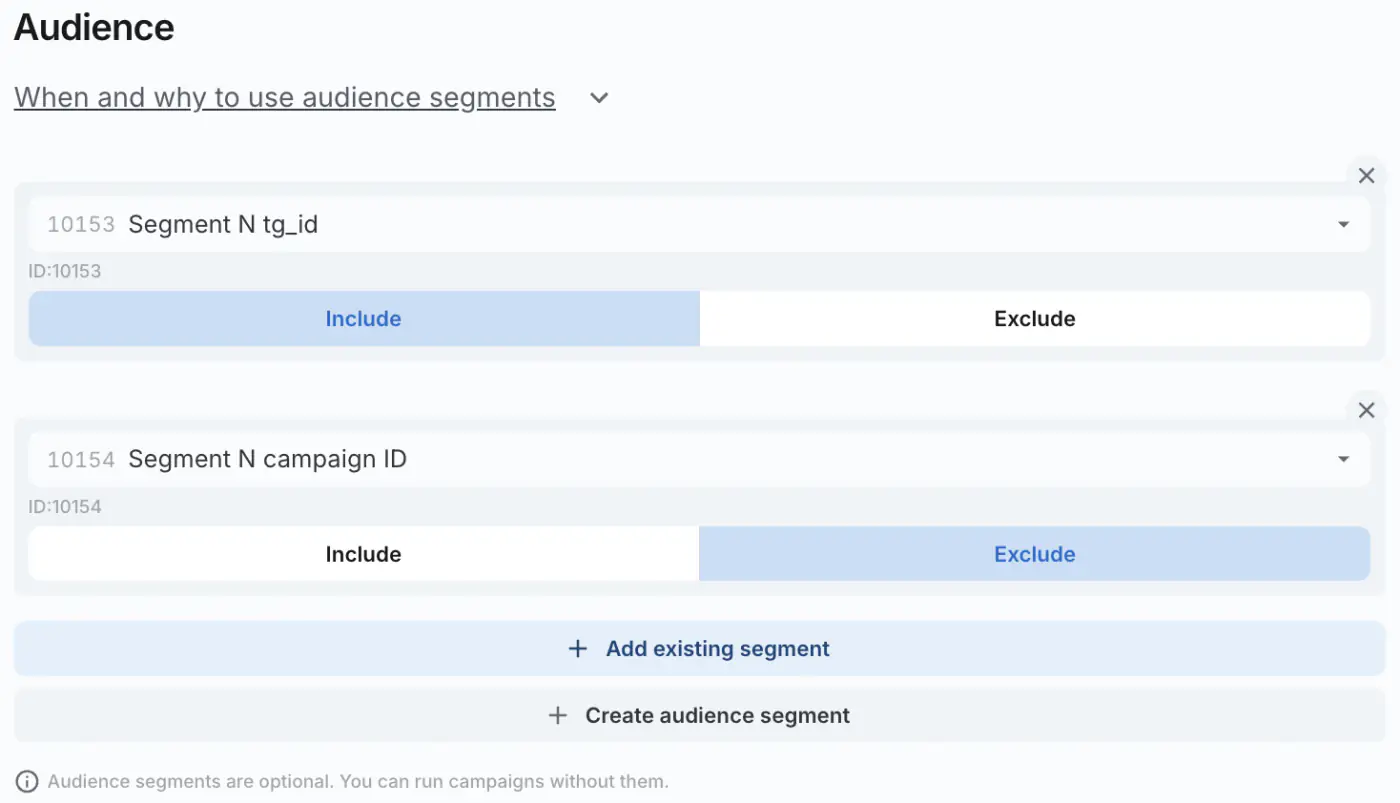
How to create segments of audience?
6. Fill in the strategy block
Pricing Model and Optimization
The available pricing models depend on the selected ad format:
- For the Media ads format, the following pricing models are available:
- CPM (cost per 1,000 impressions)
- Target CPC (tCPC)
- Target CPA (tCPA)
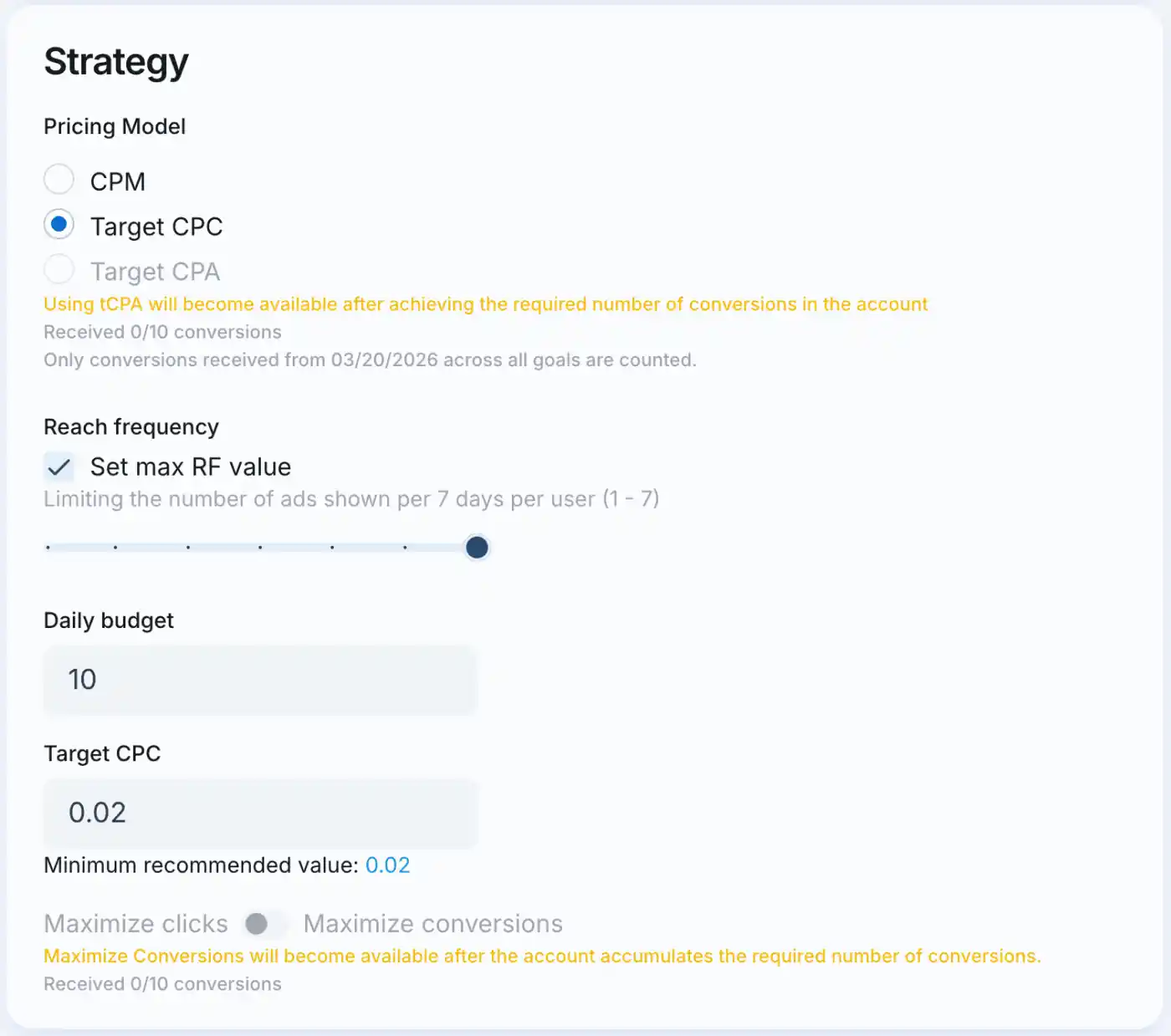
- For the Inline ads format, the following pricing models are available:
- CPC (cost per click)
- Target CPA (tCPA)
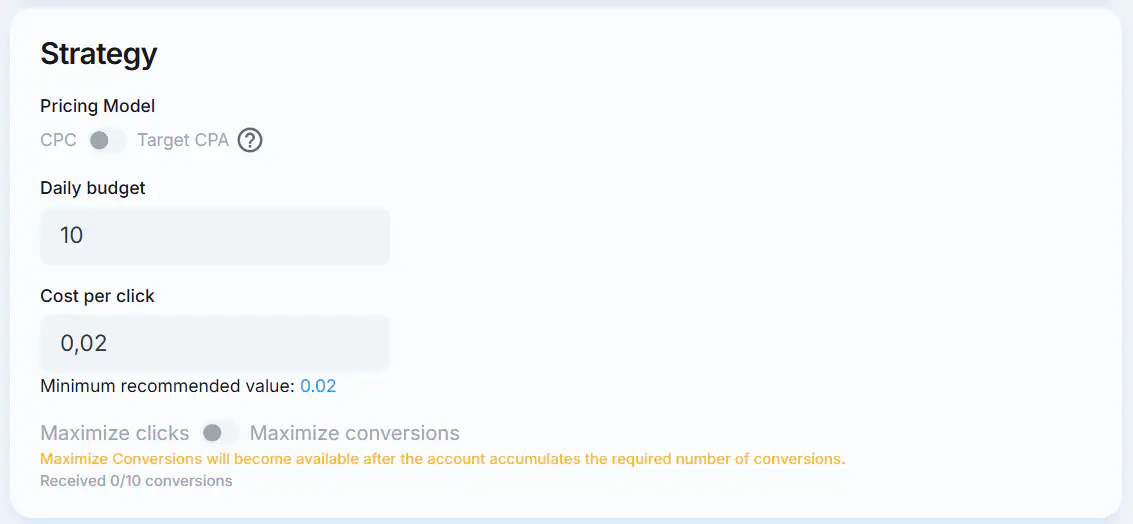
Target CPC (tCPC)
When choosing Target CPC (tCPC) as the preferred pricing model, you are charged per 1,000 impressions. At the same time, the algorithm optimizes ad delivery toward users who are more likely to click, so that the actual cost per click does not exceed the Target CPC.
For tCPC, you can select an optimization goal:
- Maximize Clicks - the algorithm optimizes impressions to generate the maximum possible number of clicks;
- Maximize Conversions - the algorithm optimizes impressions toward users who are more likely to convert.
To optimize for conversions, you must first set up conversion tracking in AdsGram and receive at least 10 conversions. For more information on setting up conversion tracking and sending conversions, see API for conversion confirmation.
Target CPA (tCPA)
Target CPA (tCPA) allows you to optimize a campaign for conversions at a specified target cost per conversion. You are charged per 1,000 impressions, while the algorithm optimizes impressions toward audiences that are more likely to convert, so that the actual cost per conversion does not exceed the Target CPA.
To unlock tCPA, you must receive at least 10 conversions after setting up conversion tracking in AdsGram. For more information on setting up conversion tracking and sending conversions, see API for conversion confirmation.
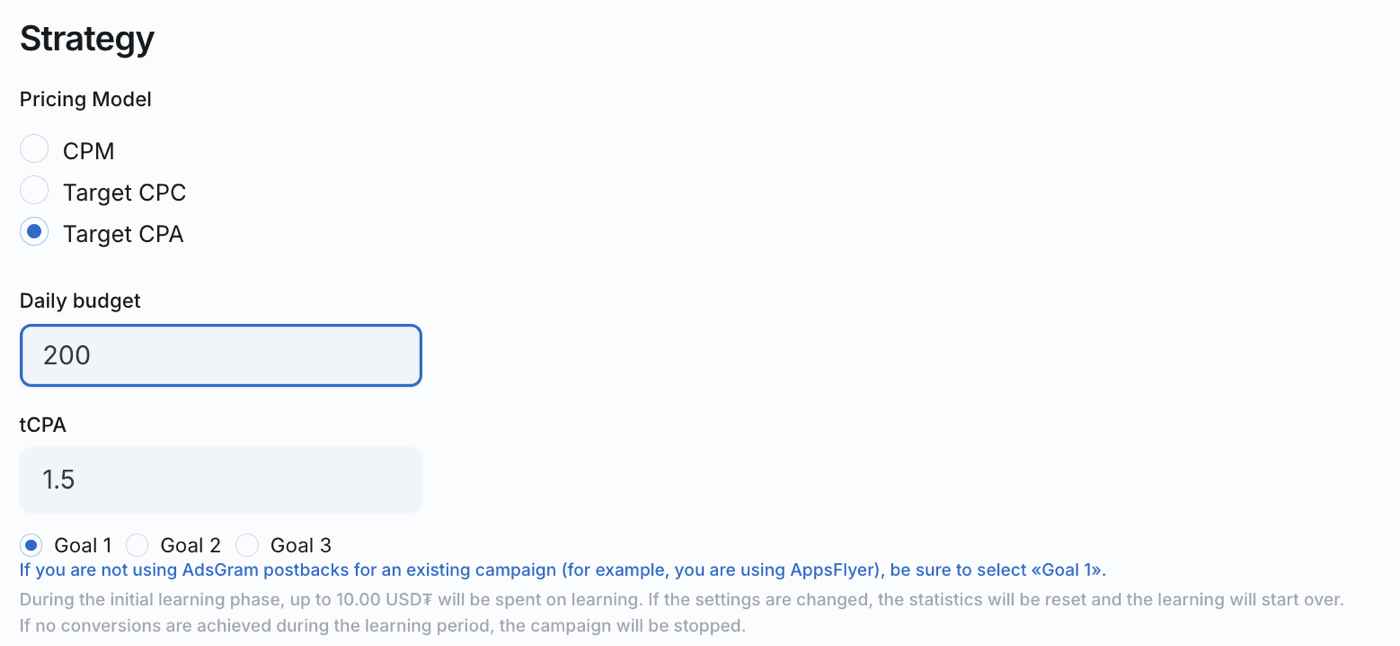
When launching a tCPA campaign, you can select one of three goals: Goal 1, Goal 2, or Goal 3. You cannot select multiple goals simultaneously - the campaign is optimized for one selected goal only.
IMPORTANT
If you use AppsFlyer to track mobile app conversions or Telegram channel subscriber tracking, you can launch a tCPA campaign only with Goal 1, as AppsFlyer installs and Telegram channel subscribers are assigned to Goal 1. When using Adjust, installs are assigned to Goal 2 by default.
IMPORTANT
Every new tCPA campaign goes through a learning phase.
During the learning phase:
- the amount that can be spent on learning will be displayed in the dashboard and depends on the specified tCPA;
- traffic volume may be lower than usual;
- we do not guarantee that the actual CPA will remain within the specified tCPA;
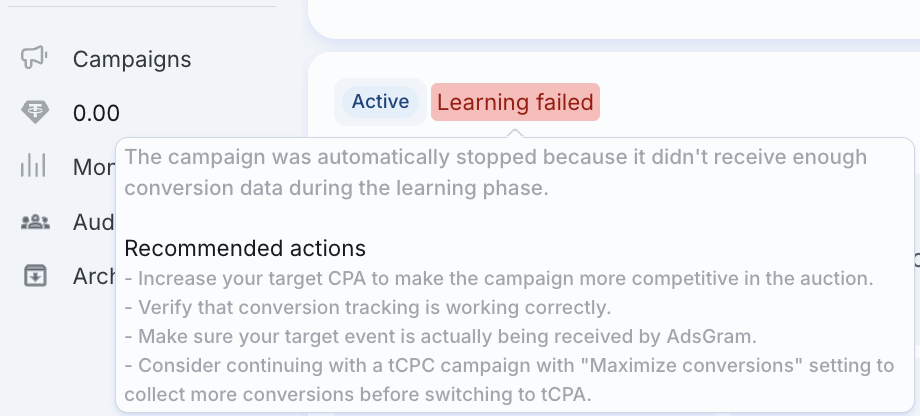
- if no conversions are received during the learning phase, the campaign will be automatically stopped.
For the algorithm to learn successfully, you need to receive conversions for the specific goal selected for the tCPA campaign. For example, if the campaign is launched with Goal 2, you need to receive at least 10 conversions for Goal 2 for the campaign to complete the learning phase.
After collecting enough conversion data, the algorithm will complete the learning phase and begin optimizing impressions more effectively for conversions at the specified tCPA.
Each tCPA campaign has a learning status displayed in the dashboard, indicating whether the learning phase has been completed successfully. If the learning phase is not completed successfully, the interface will also provide recommendations for further actions that may help the campaign complete the learning phase successfully.
IMPORTANT
Any change to the settings of a tCPA campaign, except for changes to the daily budget, will send the campaign back into the learning phase.
Reach frequency
By default, the frequency cap is set to 7 impressions per user over a 7-day period. Use the slider to reduce the frequency from 7 to 1 impression per user over 7 days. A lower frequency allows you to reach a larger number of unique users.
Click the “Set max RF value” checkbox to disable the limit on the number of impressions per user over a 7-day period.
Daily Budget
Specify the maximum amount you are willing to spend on advertising per day.
IMPORTANT
Changing the daily budget does not put tCPA campaign into the learning phase.
Recommended CPM / Target CPC
After completing the targeting setup, selecting the pricing model and optimization method, and setting the daily budget, the system will suggest a recommended CPM or Target CPC (tCPC) to help you spend your budget efficiently.
IMPORTANT
The recommended CPM and tCPC depends on the targeting settings filled out earlier.
Conversion Tracking
Setting up conversion tracking allows you to optimize campaigns for real target actions, rather than clicks alone.
After receiving 10 conversions, the following options become available:
- Maximize Conversions optimization for the Target CPC (tCPC) strategy;
- Target CPA (tCPA) pricing model.
For more information on setting up conversion tracking and sending conversions to AdsGram, see API for conversion confirmation.
7. Create a banner
To create a banner, click the Add Banner button under the Strategy section.

A campaign can have up to 10 banners that will be shown to users. You can set a custom name for each banner by clicking the pencil icon next to its name.
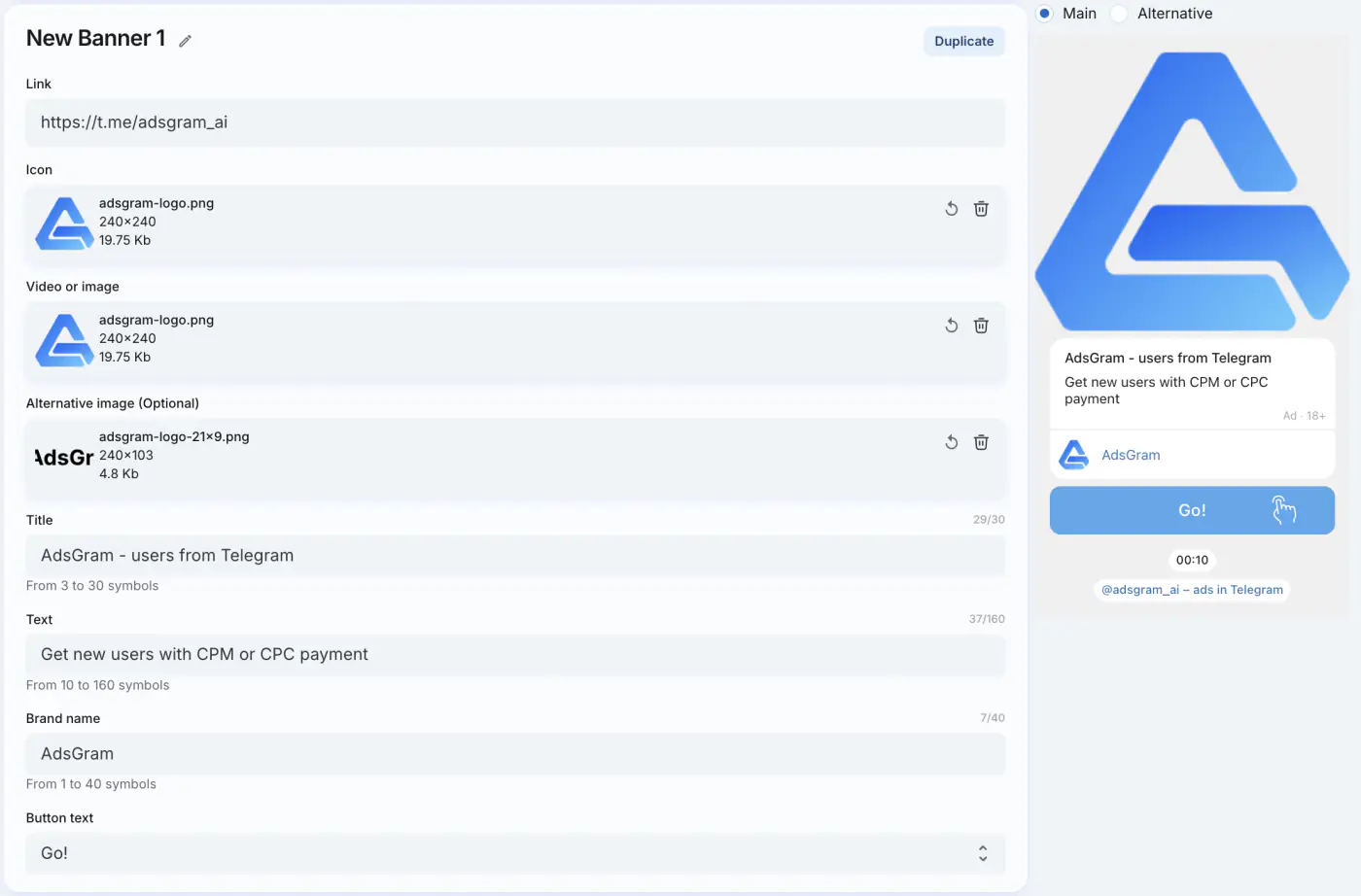
Fill in all the fields required for the banner. Learn more about the requirements for each of the campaign types on the banner types page.
When you fill in all the necessary fields, a preview of your banner will appear on the right.
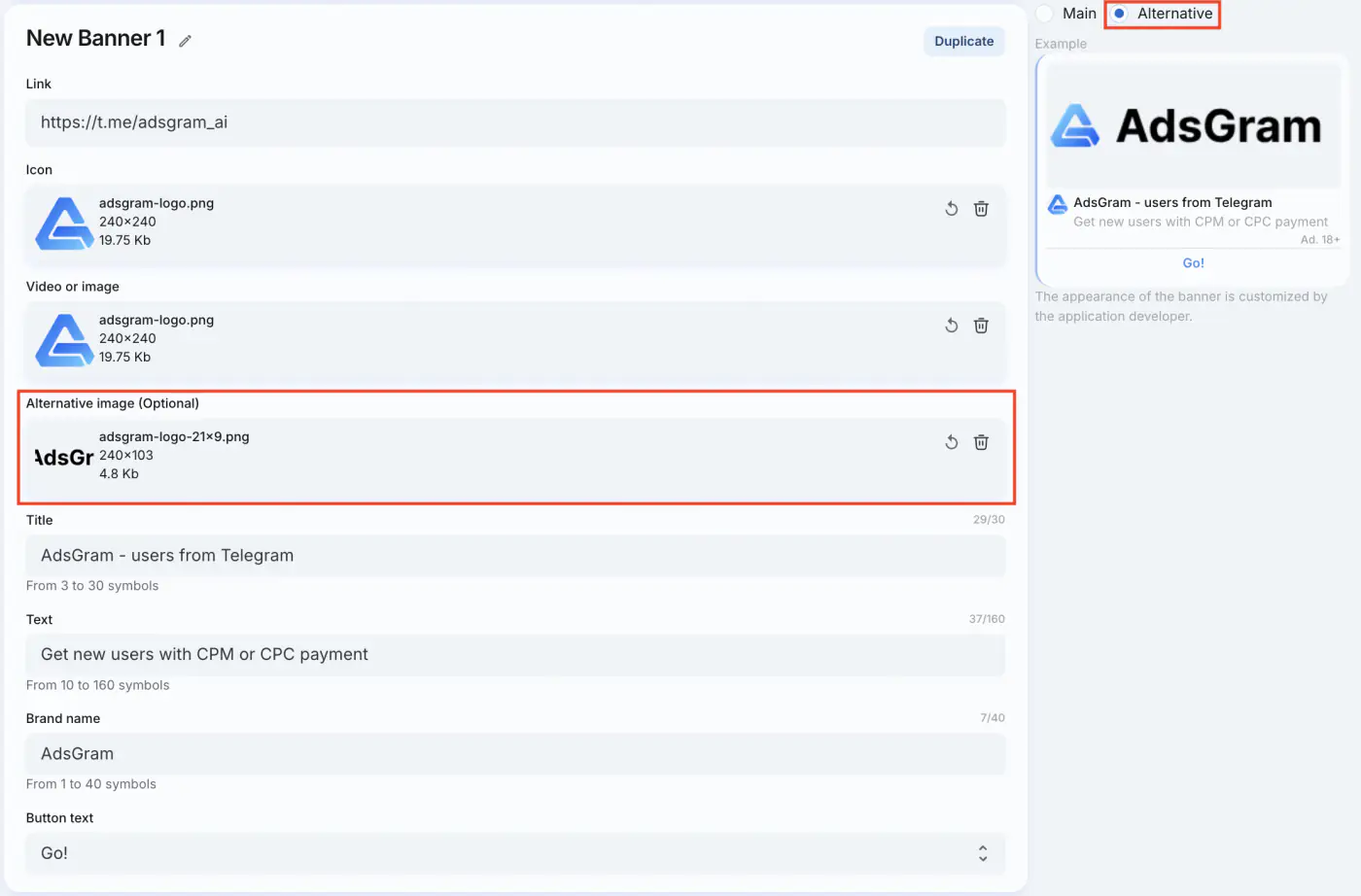
For the Media ads format, you can optionally add an alternative image for displaying the banner in chats of third-party Telegram clients.
TIP
If you advertise a web app, you can directly lead to the app, not to the bot. The bot creator can get a direct link using the /myapps command in BotFather. 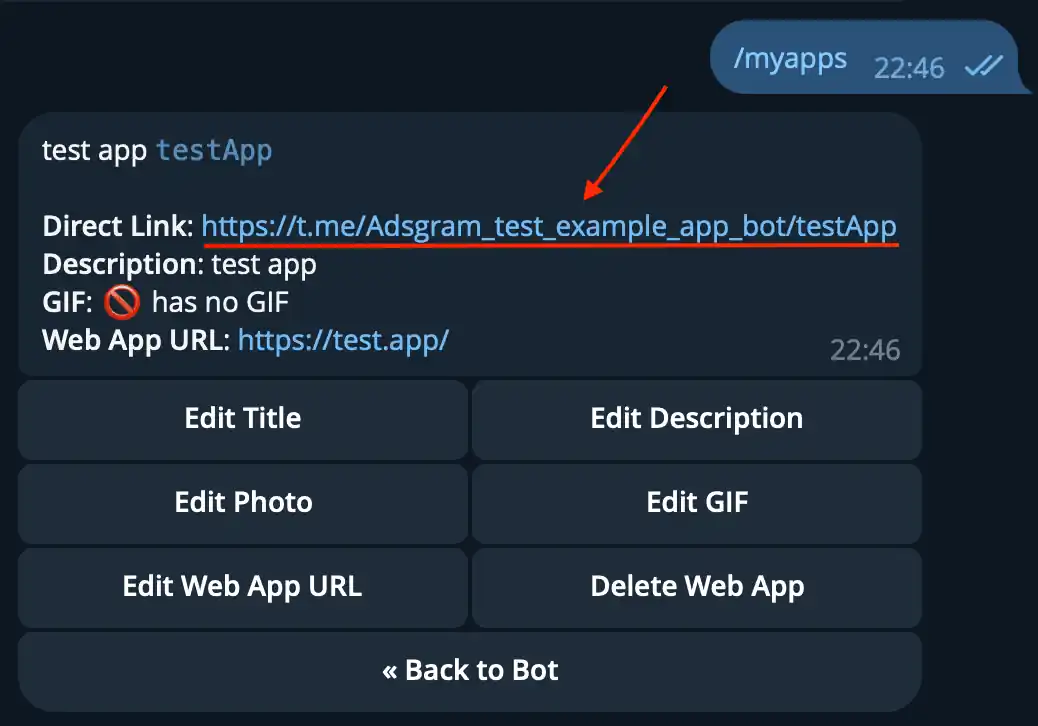
8. Launch the advertising campaign

🎉 Congratulations on the launch!
After passing moderation, the campaign status changes to "Ready to start".
After starting, the campaign becomes active and starts showing to network users if the balance is positive. How can I top up my balance?
After start, you will soon see the campaign analytics.
9. Campaign Monitoring and Optimization
After launching a campaign, regularly analyze its performance and adjust the settings when necessary. For more information about the campaign statistics and metrics available in the AdsGram dashboard, see Campaign Analytics.
- The advertiser dashboard provides key performance metrics:
- Impressions
- Clicks
- Spend (USD₮)
- CPM (Cost per 1000 impressions)
- CPC (Cost per click)
- CTR (%)
- Conversions
- CR (%)
- CPA (cost per conversion)
- You can edit, duplicate, or resume a campaign.
- Data can be exported to CSV.
Here are the main recommendations for campaign optimization:
Distribute traffic across creatives
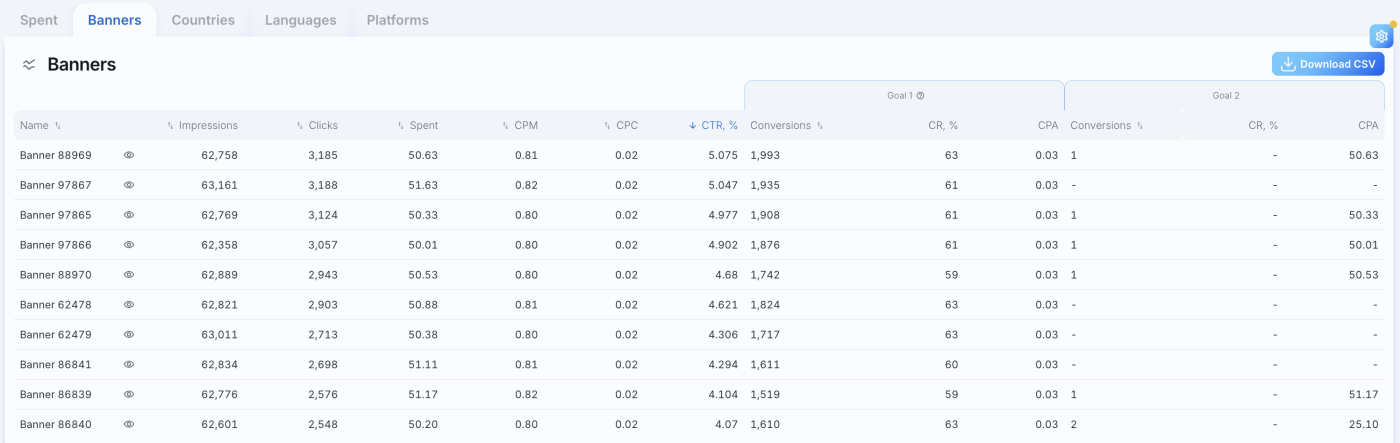
If you use multiple creatives, add them to the same campaign with the same targeting instead of creating a separate campaign for each creative.
Multiple campaigns with the same targeting compete with each other for the same audience. Combining creatives into a single campaign helps avoid this competition and ensures more even traffic distribution across creatives.
This also allows the algorithm to learn from data within a single campaign and optimize ad delivery more effectively.
Optimize targeting
Try to match the creative language to the audience language. Using multiple interface languages when the creative is available in only one language may reduce engagement and increase the cost per conversion. At a minimum, we recommend targeting the language that matches the language of the advertising creative.
Unless necessary, avoid heavily restricting the audience by both country and interface language, as this can significantly reduce the available traffic volume.
To reach a Russian-speaking audience, we recommend splitting campaigns:
- VPN audience: Russian interface language, no GEO restriction, VPN users only;
- Regular audience: Russia GEO, all interface languages, VPN excluded.
Exclude users who are already familiar with your product
To avoid spending your budget on users who are already familiar with your product, create an audience segment based on your bot's audience or previous campaigns and exclude it from active campaigns.
This will help reduce repeated impressions and direct your budget toward acquiring new users.
For more information about creating and using audiences, see Audience.
Exclude underperforming platforms
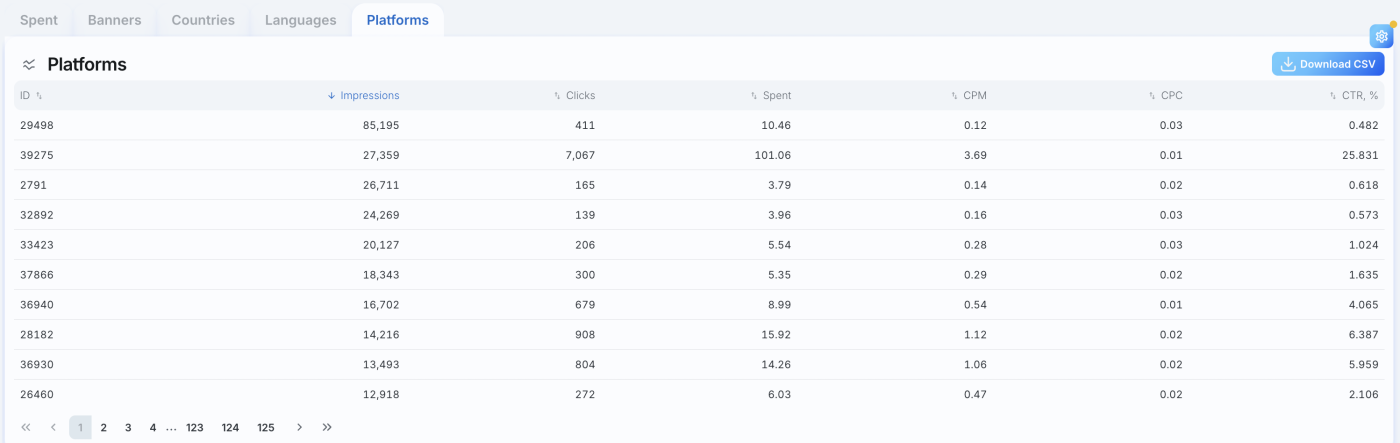
Analyze platform performance and pay attention to platforms that receive a large number of impressions but generate few or no clicks or conversions.
You can exclude such platforms from the campaign to redistribute your budget to more effective traffic sources.
To exclude platforms from ad delivery, open the campaign settings and, in the Targeting section, click Exclude impressions on some platforms.
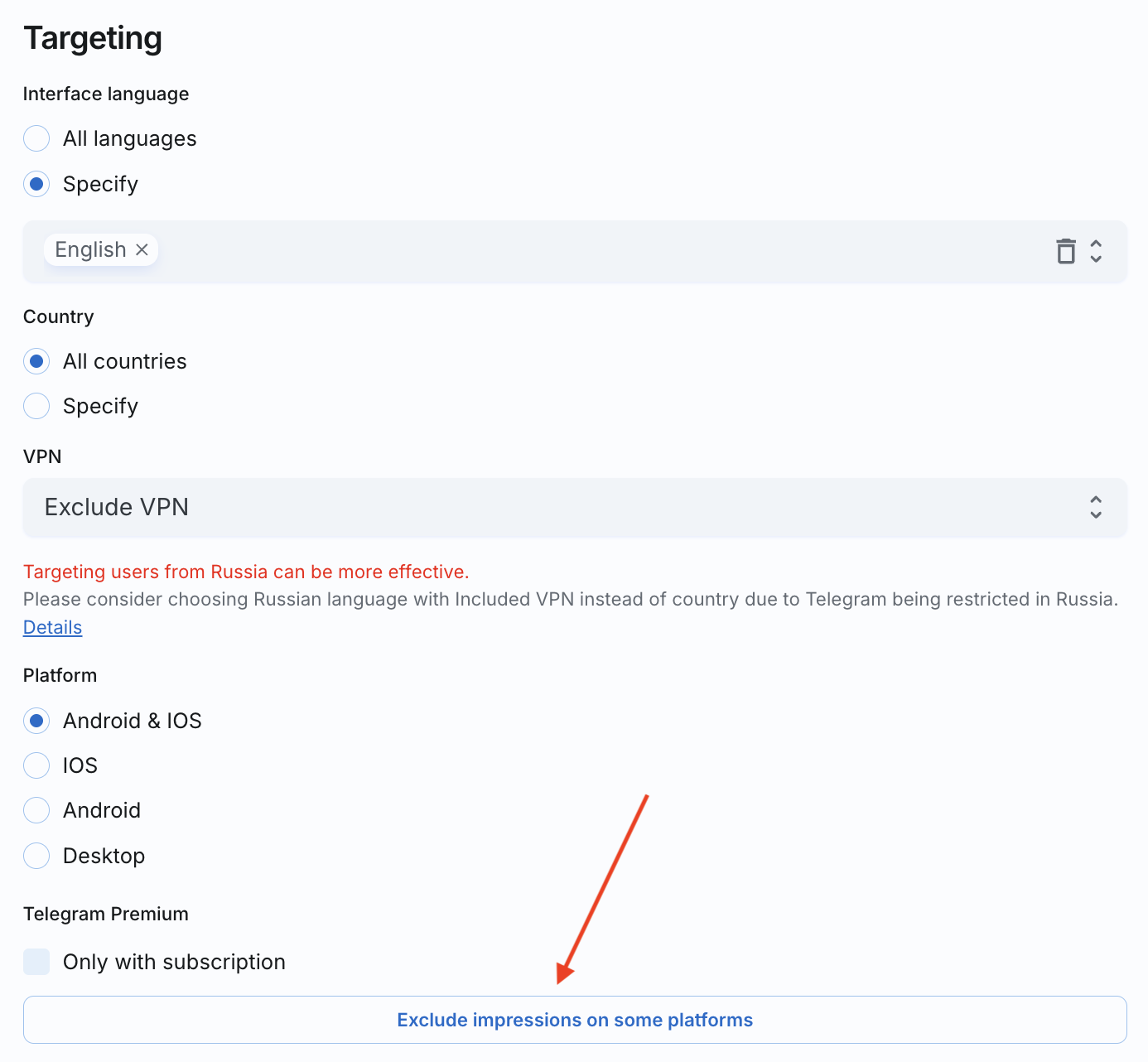
In the field that appears, enter the platform ID you want to exclude and click the "+" icon. Add all required platforms and save the campaign changes.

Consider switching from CPM to tCPC
If the main goal of your campaign is generating clicks, driving traffic, or acquiring subscribers, consider using the tCPC strategy instead of CPM.
With CPM, you pay for impressions regardless of whether users interact with the ad.
With tCPC, the algorithm optimizes ad delivery toward users who are more likely to click and aims to keep the actual cost per click at the specified target CPC.
This can help you use your budget more efficiently and reduce user acquisition costs.
Optimize the frequency of impressions per user over 7 days
A lower impression frequency allows you to distribute your budget across a larger number of unique users and can be more effective for campaigns focused on acquiring new users.
A higher RF can be useful for image and brand campaigns where showing the ad to the same user multiple times is important.
Use conversions and tCPA
Setting up conversion tracking allows you to optimize campaigns not only for clicks but also for actual target user actions.
After receiving 10 conversions, tCPC optimization for maximum conversions and the tCPA (Target CPA) pricing model become available.
For more information about setting up conversion tracking, see API for conversion confirmation.
Quickly launch a tCPA campaign
Once the tCPA model becomes available in the dashboard, you can quickly create a tCPA campaign based on an existing CPM or tCPC campaign:
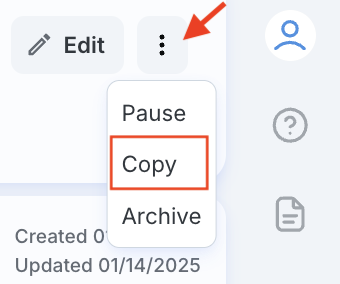
- Copy the existing campaign - a new draft will be created with all of its settings.
- Go to the campaign settings and, in the Strategy section:
- select the Target CPA pricing model;
- select the optimization goal - Goal 1, Goal 2, or Goal 3;
- enter the target CPA value.
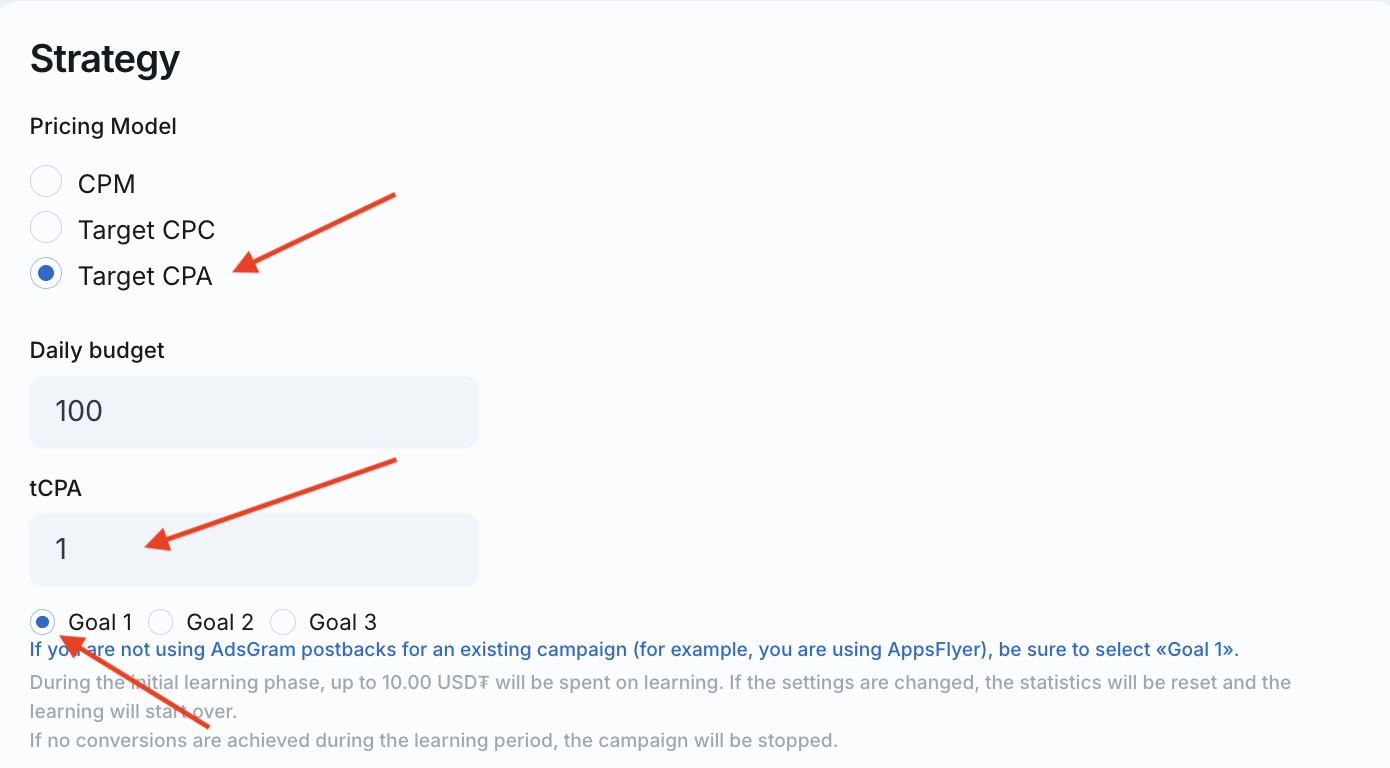
- Save and launch the campaign.
Increase the volume of impressions
If the impression volume in a CPM or tCPC campaign is lower than expected, check whether the CPM or tCPC is set below the recommended value shown on the campaign settings page.
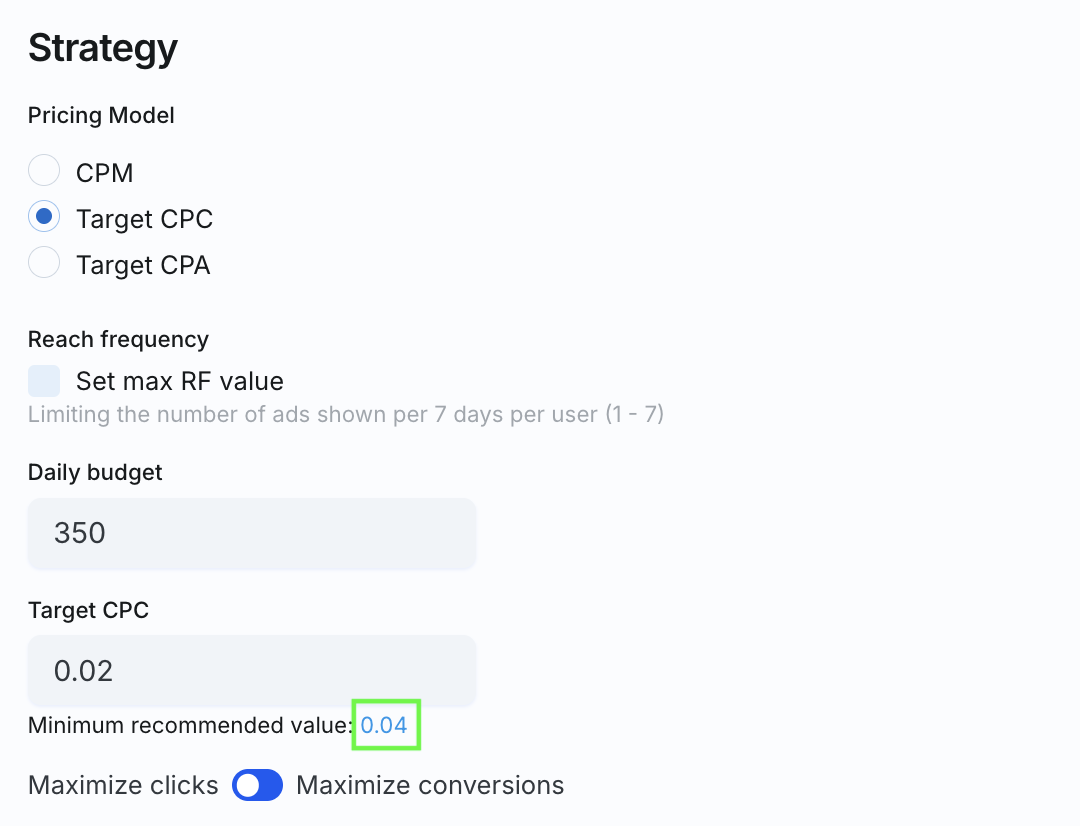
For tCPA campaigns, low traffic volume during the learning phase is normal. If the impression volume remains low after the learning phase is complete, try increasing the tCPA. At the current value, the algorithm may not be able to find enough traffic to generate conversions at the specified cost.
10. Modifying Campaign Parameters
After analyzing statistics, you can adjust campaign settings:
- Changing banner settings sends the campaign back to moderation.
- Adjusting strategy and targeting parameters does not require additional moderation.
- Any change to a tCPA campaign's settings, except for changes to the daily budget, will send the campaign back into the learning phase.
If you have any questions, contact AdsGram Support.